

A good cup of coffee at home can change your whole morning. Yet choosing among home coffee machines in Sri Lanka can feel confusing. There are capsule machines, bean-to-cup machines, and traditional espresso machines. Each promises something different, and each suits a different kind of person.
This guide keeps it simple. First, we look at how you like to drink your coffee. Then we compare the main types of machines and cover the practical details that matter in a Sri Lankan kitchen. By the end, you will know exactly what to look for.
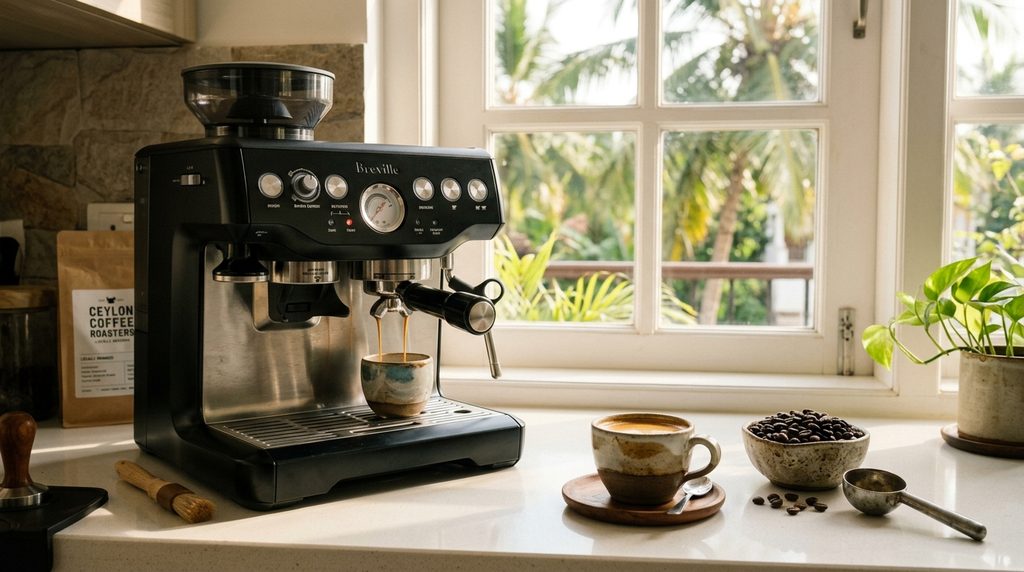
Start with How You Drink Your Coffee
Before you look at any home coffee machine, think about your mornings. Do you want a quick espresso before work? Or do you enjoy slowing down and making each cup by hand?
Next, think about milk. Cappuccinos and lattes need a frother or a steam wand. A black espresso needs neither. Then count how many cups your household drinks each day. A machine for one person is very different from a machine for a busy family.
Also, think about the full cost. The price of the machine is only the start. Capsules, fresh beans, a grinder and descaling products all add up. So plan for your first year of coffee, not just the day you buy the machine.
Honest answers to these questions will narrow your choice before you spend anything.
Home Coffee Machines in Sri Lanka: The Four Main Types
Most domestic espresso machines fall into four groups. An independent espresso machine buying guide explains the same four categories clearly.
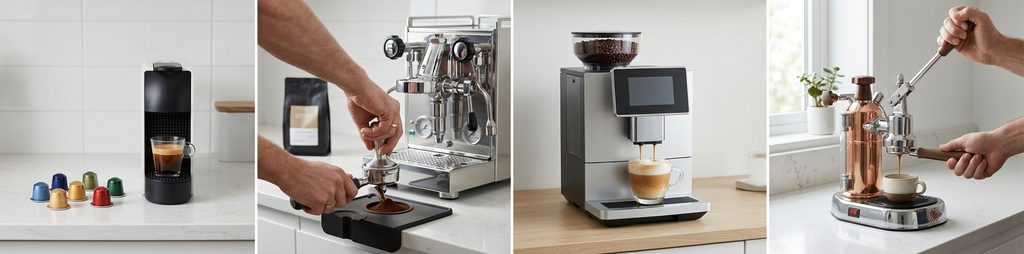
Capsule machines. You insert a sealed capsule and press a button. They are fast, tidy and simple, which makes them ideal for beginners. They are also usually the cheapest to buy. However, you pay for capsules each time, and your choice of coffee is limited to what the capsule range offers.
Semi-automatic machines. You grind and tamp the coffee yourself, and the machine handles the pressure and heat. As a result, you get far more control over flavour. On the other hand, they take time to master. You will also need to clean the portafilter and steam wand regularly.
Fully automatic machines. These grind, tamp and brew at the touch of a button. Many also froth milk. They are perfect for busy households. In return, you get less control over the final taste than with a semi-automatic machine.
Manual machines. You control almost every step. They suit coffee lovers who enjoy the ritual, but they are not the easiest place to start.
If you are unsure, start with the question that matters most. Do you want convenience or control? Convenience points to capsule or fully automatic machines. Control points to semi-automatic or manual ones.
A quick note on filter coffee makers. Filter machines, also called drip machines, are another popular choice at home. They brew a larger pot at once, so they suit families who drink several cups in the morning. However, they do not make espresso or milk drinks. If those matter to you, stay with the four types above.
Do You Need a Grinder?
Often, yes. Fresh coffee tastes better than coffee ground days ago. Fully automatic home coffee machines include a grinder, so you are covered. Semi-automatic and manual machines usually do not. In that case, you will need a separate burr grinder, so include it in your budget from the start.
Fresh beans matter just as much as the machine itself. For a local choice, try Toscana Ceylon, a 100% Arabica blend grown in the central hills of Sri Lanka. Whichever beans you pick, store them in an airtight container. Sri Lanka’s warm, humid weather can dull coffee quickly. If you are curious about where that coffee begins, read how we recently exported Sri Lankan green coffee to Dubai.
Practical Checks for Home Coffee Machines in a Sri Lankan Kitchen
Some details are easy to forget until the box arrives. Therefore, check these before you buy.
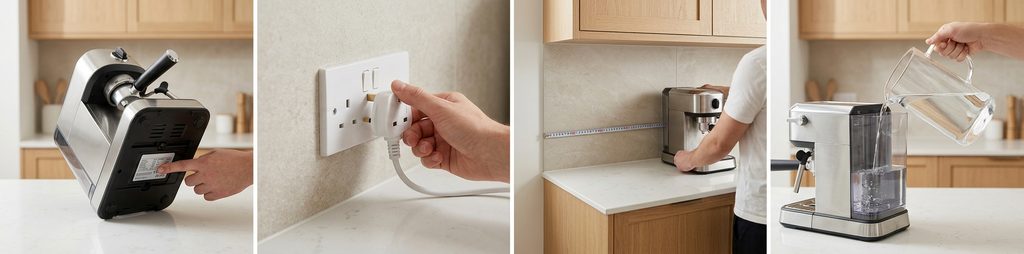
- Voltage. Sri Lanka runs on 230 volts at 50 hertz. Make sure your machine is rated for it.
- Plug. The current standard is the British three-pin type G, and Sri Lanka’s mains voltage and plug standards are easy to confirm. Some older homes may still have older sockets, so check yours.
- Space. Measure your counter, including the height under your cabinets. Many machines need room to open the lid or fill the tank.
- Water. If your kettle collects limescale, your coffee machine will too. Use filtered water and descale on schedule.
Why Servicing Matters for Home Coffee Machines in Sri Lanka
A machine is only as good as the support behind it. In any market, parts, repairs and expert advice are not always easy to find. Consequently, a lower price from an unknown seller can cost you more in the end.
Before you buy, ask three questions:
- Is there a local warranty?
- Who services the machine, and where?
- Are spare parts and descaling products easy to get?
This is where an established supplier helps. Colombo Coffee Company is the authorised Lavazza agent in Sri Lanka and imports machines from Italy, Germany and the US. We also provide machine servicing and barista training, so you can learn to get the best from your machine.
A Simple Way to Decide
If you want the quickest, tidiest cup, choose a capsule machine. If you want one-touch drinks with fresh beans, choose a fully automatic machine. If you enjoy experimenting, choose a semi-automatic machine with a good grinder. Lastly, if you love the full ritual, choose a manual machine.
The best of the home coffee machines in Sri Lanka is not the most expensive one. It is the one you will use happily every day.
Ready to buy a coffee machine in Sri Lanka? Speak to the Colombo Coffee Company team or write to us. We will help you find the right machine for your home and your taste.