

When people hear the name Ceylon, tea is usually the first thing that comes to mind. But long before Ceylon became synonymous with tea, coffee was already an important part of Sri Lanka’s agricultural history.
Today, Ceylon coffee is finding its way back into the spotlight. Smallholder farmers, local producers and specialty coffee enthusiasts are rediscovering the potential of coffee grown in Sri Lanka’s central highlands.
What makes the story particularly interesting is that Sri Lankan coffee does not have one single identity. Coffee grown in Kandy can have a different character from coffee produced around Matale, Kotmale or Bandarawela. Elevation, rainfall, soil, climate, variety and processing all contribute to the final cup.
To understand Ceylon coffee origins, you have to look beyond the country name and explore the individual regions where the coffee begins.
A Brief History of Ceylon Coffee
Sri Lanka’s commercial coffee story began centuries ago. According to the Sri Lanka Export Development Board’s history of Ceylon coffee, commercial coffee cultivation began around 1780 under Dutch rule before expanding significantly under the British.
Coffee became a major plantation crop, particularly across the central highlands. At its peak in the nineteenth century, coffee covered hundreds of thousands of acres.
Then came coffee leaf rust.
The disease devastated the industry, causing coffee cultivation to decline dramatically. Tea eventually became Sri Lanka’s dominant plantation crop, while coffee continued on a much smaller scale.
The story did not end there. Interest in Ceylon coffee began returning during the 1990s, and Sri Lanka’s growing specialty coffee culture has since created new opportunities for local farmers and producers.
Mapping Sri Lanka’s Coffee Growing Regions
Sri Lanka’s coffee-growing landscape is diverse. The Sri Lanka Export Development Board identifies Nuwara Eliya, Kandy, Matale and Badulla among the country’s important Arabica-growing areas, while Robusta is also cultivated in lower-elevation regions.
This regional diversity is what makes exploring Sri Lankan coffee regions so fascinating.
Kandy: A Historic Coffee Region
Kandy sits at the heart of Sri Lanka’s central highlands and has a deep connection with the island’s coffee heritage.
The surrounding hills provide a combination of elevation, rainfall and fertile soils that can support coffee cultivation. Today, coffee is often found within smaller farms and mixed agricultural systems rather than the huge plantations associated with the nineteenth-century coffee era.
Kandy also demonstrates how Sri Lankan coffee exists alongside other crops. Farmers may cultivate coffee together with spices, fruit and other plants, creating a diverse agricultural environment rather than a single-crop plantation.
For anyone researching Ceylon coffee origins, Kandy is an essential part of the map.
Matale: Smallholders and the Coffee Revival
Moving north from Kandy, Matale is another important coffee-growing region.
The district has become particularly interesting in the modern revival of Sri Lankan coffee. Coffee farming in Matale includes smallholder communities, and the region has also been associated with efforts to strengthen coffee production and processing.
The Sri Lanka Export Development Board has also highlighted community-based coffee businesses operating in Matale. One example is Kiyota Coffee, which has developed a community-focused model involving farmers and local production.
This is an important part of the new Ceylon coffee story. The future of Sri Lankan coffee is not necessarily about returning to enormous plantations. Instead, it can be about creating stronger connections between small farmers, processors, roasters and consumers.
Nuwara Eliya: Coffee in the High Country
Nuwara Eliya is internationally famous for tea, but its high-altitude environment is also suitable for Arabica coffee.
The region sits at a much higher elevation than many other parts of Sri Lanka. According to the EDB, Nuwara Eliya’s highland conditions contribute to a distinctive coffee character, with the region associated with mellow and earthy qualities.
This is where the idea of terroir becomes particularly important.
Two coffees can come from the same country and still taste noticeably different because they were grown at different elevations, under different weather conditions and in different soils.
Kotmale and the Surrounding Highlands
Kotmale is another fascinating area when looking at coffee from Sri Lanka.
The EDB notes that coffee from Kotmale can display citrus and floral characteristics, demonstrating how flavour can vary even within Sri Lanka’s highland coffee-growing areas.
This is one reason single-origin coffee is becoming increasingly interesting. Instead of simply knowing that the beans came from Sri Lanka, consumers can begin to understand the specific landscape behind the coffee.
Badulla and Bandarawela
Further east, the highlands around Badulla and Bandarawela add another layer to Sri Lanka’s coffee map.
The EDB highlights Bandarawela coffee for honey and fruity characteristics, showing again how micro-regional differences can influence flavour.
These subtle differences are what make a farmer-to-cup journey meaningful. The name of the growing region becomes part of the identity of the coffee.
From Farmer to Cup
The story of Ceylon coffee does not end with where the beans are grown.
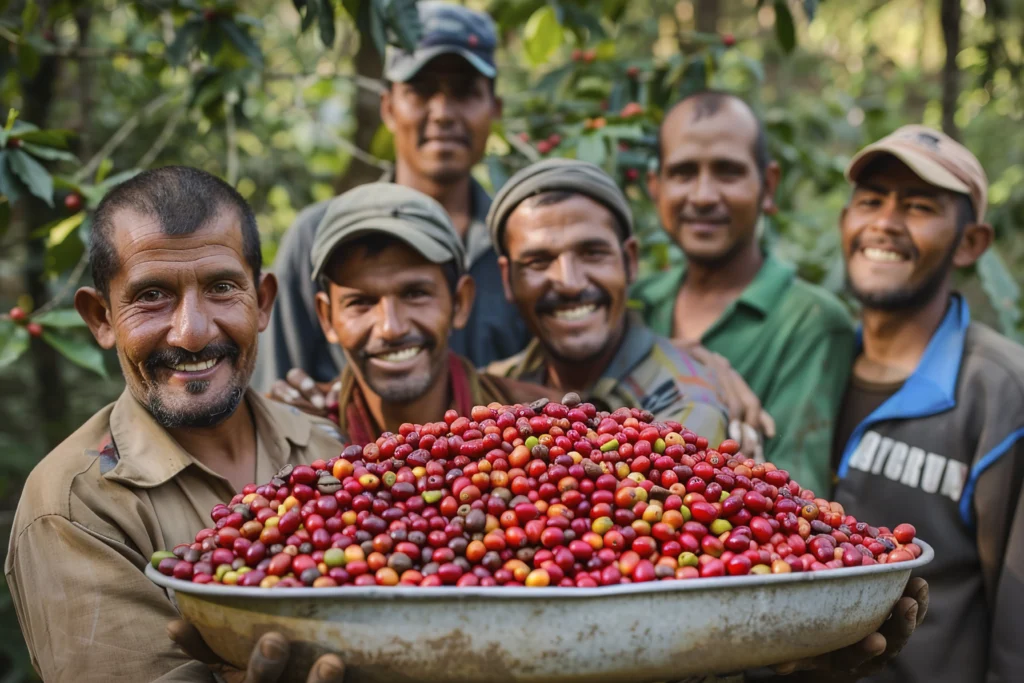
Once coffee cherries are harvested, they must be processed, dried, sorted, roasted and prepared for brewing. Every stage can influence the final flavour.
For farmers, harvesting ripe cherries and maintaining careful post-harvest practices can make a significant difference. For processors, drying and processing methods help shape the characteristics of the green beans. For roasters, the challenge is to bring out the qualities already present in the coffee without overpowering them.
Finally, the coffee reaches the consumer.
This is where Colombo Coffee Company’s coffee solutions become part of the wider coffee experience. From sourcing and preparation to the final cup, coffee is ultimately a chain of people, skills and decisions connecting the farm to the drinker.
The Return of Ceylon Coffee
The revival of Ceylon coffee is not simply about bringing back an old plantation crop.
It is about developing a modern coffee identity for Sri Lanka.
The country’s specialty coffee movement is increasingly focused on provenance, quality and the unique characteristics of individual growing regions. The EDB notes that internationally cupped Sri Lankan coffees have demonstrated strong specialty potential, with examples showing chocolate, nutty and berry flavour characteristics.
At the same time, businesses such as Toscana Ceylon are helping connect Sri Lankan coffee with contemporary consumers and coffee culture.
For coffee drinkers, this creates an opportunity to explore something beyond familiar global origins. A cup from Sri Lanka can tell the story of a mountain, a village, a farmer and a particular harvest.
Why the Region Matters
The next time you see Sri Lankan coffee on a menu or a coffee bag, look beyond the words “Sri Lanka.”
Ask where it was grown.
Was it Kandy?
Matale?
Nuwara Eliya?
Kotmale?
Bandarawela?
The answer can reveal something about what you might find in the cup.
The concept of Ceylon coffee origins is ultimately about understanding this connection between geography and flavour. Sri Lanka may be a relatively small island, but its mountains, valleys, rainfall patterns and elevations create remarkably varied environments for coffee.
That diversity gives Ceylon coffee its story.
From Sri Lanka’s Farmers to Your Cup
Ceylon coffee has travelled a long road.
From its early plantation history and the devastating coffee rust epidemic to today’s growing specialty coffee movement, the industry has continually changed. What remains constant is the relationship between the land and the people who cultivate it.
Today, discovering Sri Lankan specialty coffee means discovering these individual stories.
You can explore the wider coffee experience through Colombo Coffee Company and discover its Toscana Ceylon offering as part of that journey.
Because every cup has an origin.
And when that origin is Sri Lanka, the journey from farmer to cup is a story worth tasting.
Suggested Internal Links
Ceylon Coffee / Coffee Solutions:
https://coffee.lk/coffee/
Toscana Ceylon:
https://coffee.lk/toscana-ceylon/
About Colombo Coffee Company:
https://coffee.lk/about-us/
Contact:
https://coffee.lk/contact/
Suggested External Links
Sri Lanka Export Development Board: Ceylon Coffee:
https://www.srilankabusiness.com/food-and-beverages/coffee-from-sri-lanka.html
Sri Lanka Export Development Board: Coffee from Sri Lanka:
https://www.srilankabusiness.com/blog/coffee-from-sri-lanka.html
These external sources support the historical and regional claims in the article, including Sri Lanka’s coffee history, growing regions and regional flavour differences.