

Choosing a coffee machine is one of those decisions that quietly shapes every cup you serve for the next five to ten years. Get it right and your espresso is sweet, consistent and fast, even during a Saturday morning rush. Get it wrong and you spend years fighting temperature swings, thin crema and repair bills. This guide walks through every type of coffee machine sold in Sri Lanka, how to match one to your volume and budget, and the maintenance routine that keeps it pouring like new.
Why your coffee machine matters more than your recipe
Espresso is a physics problem before it is a flavour problem. Around nine bars of pressure pushes water at roughly 92-96°C through a compressed puck of coffee in 25-30 seconds. A good coffee machine holds that temperature within a degree, delivers steady pressure from the first shot to the hundredth, and produces dry steam that folds milk into glossy microfoam. A weak machine cannot do any of that reliably, so your barista spends the day chasing a moving target.
In Sri Lanka there is a second factor most buyers forget: water and climate. Hard water scales up boilers quickly, humidity swells ground coffee, and voltage fluctuations are hard on electronics. The machine that survives here is the one that is properly specified, properly plumbed and properly serviced, not necessarily the most expensive one in the showroom.
The five types of coffee machine, explained simply
1. Manual lever machines
You generate the pressure yourself with a lever. Beautiful, tactile and completely unforgiving. Wonderful for hobbyists who enjoy the craft, but a poor choice for a business that needs speed and repeatability.
2. Semi-automatic espresso machines
The pump handles pressure and you decide when to stop the shot. This is the sweet spot for serious home baristas and most specialty cafes because it gives you control over every variable that matters. A Gaggia in a home kitchen and a La Cimbali or Nuova Simonelli behind a counter all belong to this family.
3. Fully automatic and bean-to-cup machines
Grinding, dosing, tamping, brewing and milk texturing all happen behind one button. Accuracy is excellent and staff training is minimal, which is why hotels, offices and quick-service outlets love them. Look at Jetinno or WMF style units when consistency without a trained barista is the priority.
4. Capsule machines
Zero learning curve, zero mess and perfect portion control. The cost per cup is higher and you give up the ability to tune anything, but for hotel rooms, boardrooms and small offices a capsule coffee machine is often the smartest answer.
5. Filter, batch and pour-over brewers
Not every coffee machine makes espresso. Batch brewers produce litres of clean, aromatic filter coffee at a fraction of the cost per cup, and they are the best way to show off the delicate florals in a single-origin Ceylon lot.
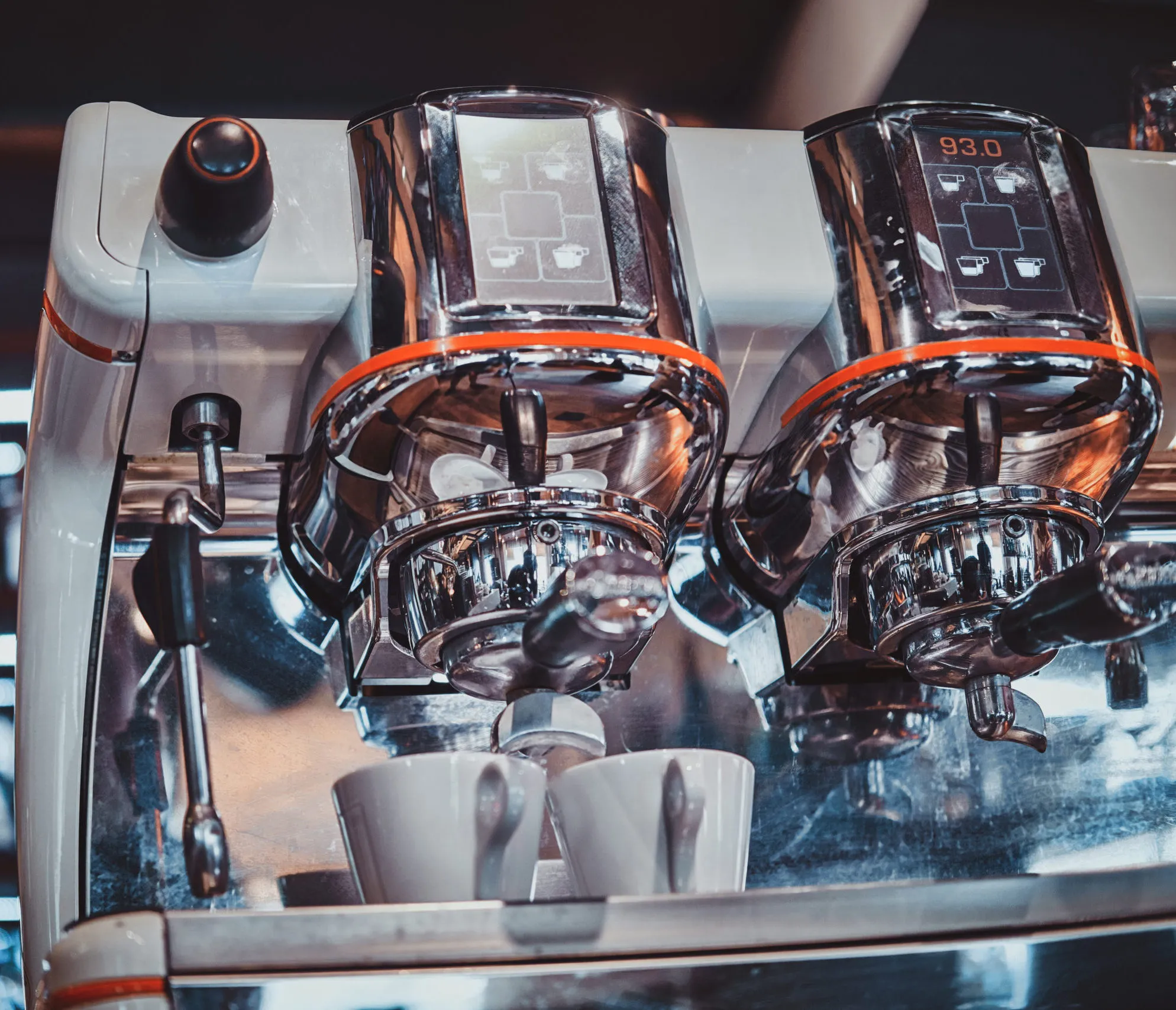
Quick comparison: which coffee machine suits you?
| Machine type | Best for | Skill needed | Cups per hour |
|---|---|---|---|
| Manual lever | Enthusiasts, tasting bars | High | 10-15 |
| Semi-automatic, 1 group | Home baristas, small cafes | Medium | 30-60 |
| Semi-automatic, 2-3 group | Busy cafes, restaurants | Medium to high | 120-300 |
| Bean-to-cup | Hotels, offices, QSR | Low | 60-120 |
| Capsule | Rooms, boardrooms, homes | None | 20-30 |
| Batch brewer | Buffets, events, filter bars | Low | 100 plus |
Seven questions to answer before you buy a coffee machine
- How many cups in your busiest hour? Size for the peak or your queue will never move.
- Espresso or filter led? A milk-heavy menu needs steam power; a filter-led menu needs brewing volume.
- Who will operate it? Trained baristas justify a semi-automatic. High staff turnover points to bean-to-cup.
- Can you plumb and drain it? Plumbed machines with proper filtration outlive tank-fed ones in hard-water areas.
- Is the power supply stable? Check single versus three phase and budget for a stabiliser where supply is erratic.
- Are spares and service available locally? A brand with no local technician is a very expensive ornament.
- Have you budgeted for the grinder? A great coffee machine with a cheap grinder will always taste average.
Sizing a commercial coffee machine by daily volume
| Drinks per day | Recommended coffee machine | Grinders |
|---|---|---|
| Up to 40 | 1-group semi-automatic or premium home machine | 1 |
| 40-150 | 2-group semi-automatic | 1-2 |
| 150-400 | 2-group with high-capacity boiler, or 3-group | 2 |
| 400 plus | 3-group plus a batch brewer for filter | 2-3 |
Add a second grinder before you add a second coffee machine. One grinder for your house espresso and one for decaf or a single origin doubles your menu without doubling your footprint.
What a coffee machine really costs to own
The sticker price is only the beginning. Build a simple five-year view before you commit:
- Water treatment. Filters and softeners are cheap; a scaled-up boiler replacement is not.
- Consumables. Gaskets, shower screens, group seals and cleaning powder are routine wear items.
- Annual service. One preventive visit a year costs far less than one emergency callout on a public holiday.
- Electricity. A large boiler left on overnight is pure waste, so timers pay for themselves in months.
- Training. Two days at a proper coffee academy improves your cup more than any hardware upgrade.
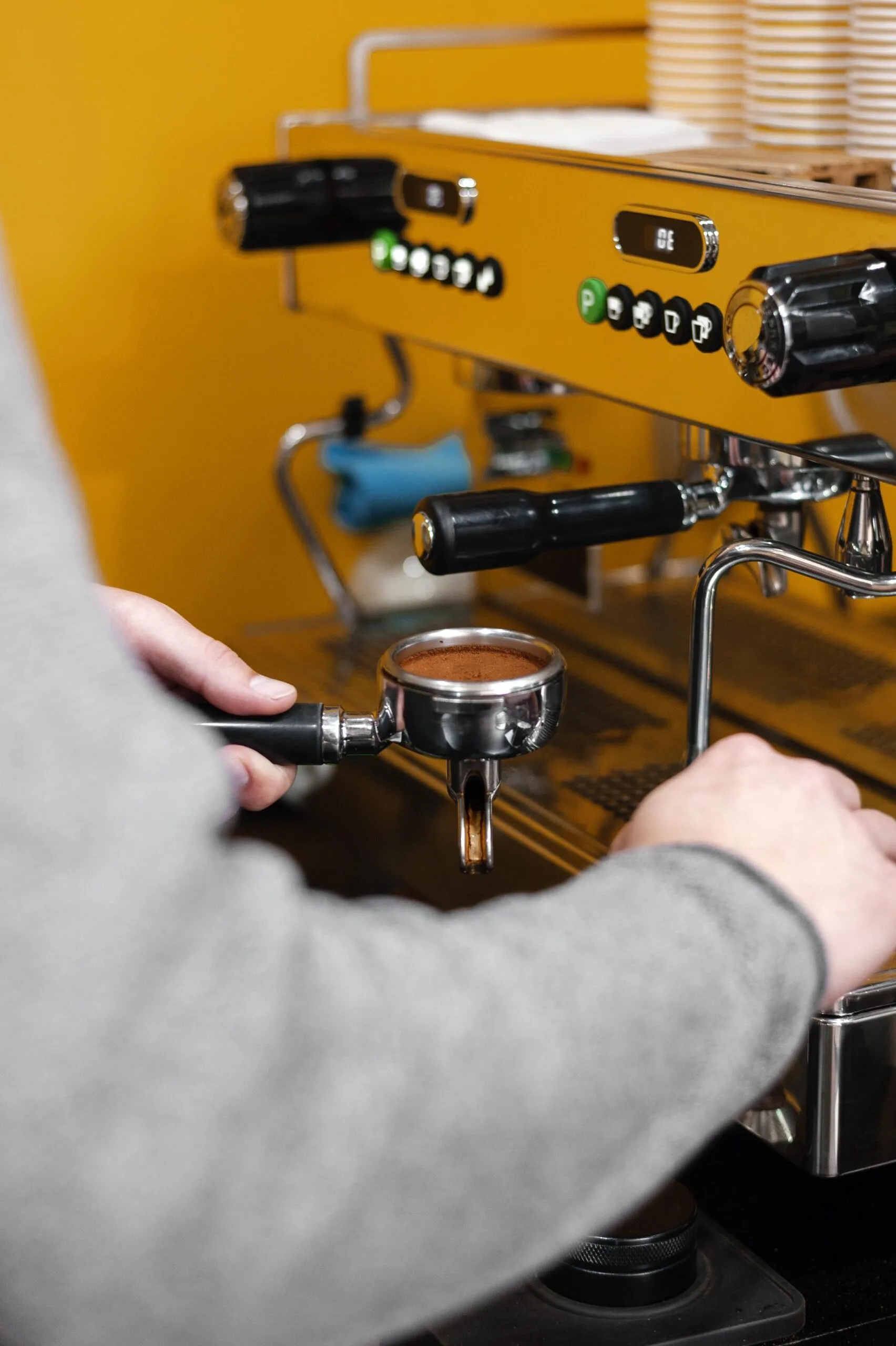
Coffee machine maintenance: the routine that actually works
Every day
- Backflush each group with cleaning detergent at close, then rinse until the water runs clear.
- Wipe steam wands after every drink and purge them before and after texturing milk.
- Soak portafilters and baskets, but keep plastic handles out of the water.
- Empty and rinse the drip tray and drain box so nothing sours overnight.
Every week
- Remove shower screens and dispersion blocks and scrub away coffee oils.
- Brush out the grinder chamber and chute, where stale grounds hide and turn bitter.
- Check group gaskets for hardening, and note the date when they start to leak.
Every month and every year
- Replace or regenerate water filters on a schedule, not when the taste drops off.
- Log boiler pressure, brew temperature and shot timing so you can spot slow drift.
- Book one professional service each year, and replace grinder burrs every 300-600 kg of coffee.
Five coffee machine mistakes we see every week
- Under-sizing the machine. A one-group unit cannot serve a 200-cup morning, no matter how good the barista is.
- Skipping water treatment. Scale is the single biggest killer of coffee machines in Sri Lanka.
- Pairing a premium machine with a supermarket grinder. The grinder sets the ceiling on flavour.
- Never recalibrating. Humidity and bean age change overnight, so dial in every morning.
- Buying grey-market units. No warranty, no spares and no technician when it matters.
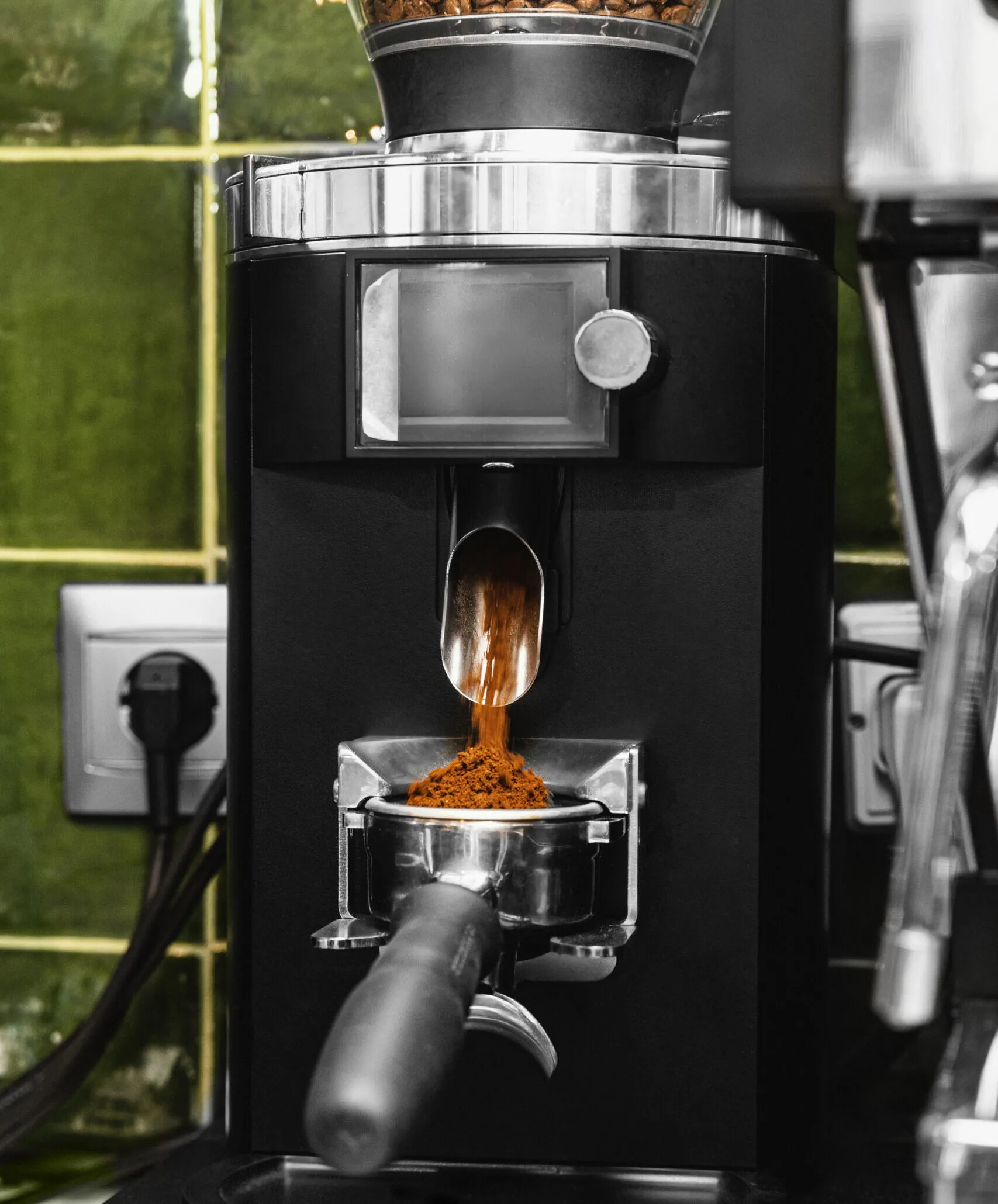
Your machine and your beans are one system
A coffee machine cannot rescue stale coffee, and fresh coffee cannot rescue an unstable machine. Start with a dose of 18-20 g for a double basket, aim for a 1:2 ratio in 25-32 seconds, and adjust grind size first before you touch anything else. If the shot runs fast and tastes sour, grind finer. If it chokes and tastes harsh, go coarser. Once the machine is stable, the beans do the talking, so it is worth reading our guides on how to choose coffee beans in Sri Lanka and the best coffee beans for espresso machines.
Frequently asked questions about coffee machines
Which coffee machine is best for a small cafe in Colombo?
A two-group semi-automatic with a single on-demand grinder handles most small cafes comfortably, and it leaves room to grow without another capital purchase.
Do I need a plumbed coffee machine?
For anything above roughly 40 cups a day, yes. Plumbing with filtration keeps water quality consistent and removes the risk of a tank running dry mid-service.
How long should a coffee machine last?
A quality commercial machine that is descaled, serviced annually and fed treated water will run well past ten years. Neglect water treatment and the same machine may struggle after three.
Is a bean-to-cup machine good enough for specialty coffee?
Modern bean-to-cup units are impressively consistent and ideal for offices and hotels. If your brand story is built on hand-crafted espresso, a semi-automatic still gives a barista more room to express the coffee.
Choosing your next coffee machine
Work out your peak volume, decide who will operate the machine, protect it with proper water treatment and pair it with a grinder that deserves it. Do those four things and almost any well-built coffee machine will reward you for a decade.
Want help matching a machine to your space? Browse our coffee range, compare the Astoria, Solis and Gaggia line-ups, or talk to the Colombo Coffee Company team for a demo.