

Great coffee beans are the single cheapest upgrade you can make to your daily cup. You can spend a fortune on hardware and still end up with a flat, papery espresso if the beans are three months past roast, stored badly or ground at the wrong setting. This guide covers how to read a bag of coffee beans, which roast to buy, how fine to grind and how to keep beans fresh in Sri Lanka’s heat and humidity.
What actually makes coffee beans taste good
Four things decide the flavour in your cup, and only one of them is the machine. Variety and origin set the raw potential of the coffee beans. Processing at the mill decides whether the cup leans clean and tea-like or heavy and fruity. Roasting develops sugars and acids into the aromas you smell in the bag. Freshness and grind decide how much of that survives to reach your cup.
That is why two bags of coffee beans at the same price can taste nothing alike. It is also why the roast date matters far more than the brand name on the front.
Arabica and Robusta: what the label really means
| Arabica coffee beans | Robusta coffee beans | |
|---|---|---|
| Flavour | Sweet, aromatic, more acidity | Bold, woody, chocolatey, low acidity |
| Caffeine | Lower | Roughly double |
| Crema | Softer, finer | Thick and long lasting |
| Best in | Filter, pour-over, single-origin espresso | Blends for milk drinks and body |
Sri Lanka grows both, with highland Arabica from the central hills and Robusta from the lower, wetter districts. If you want to understand the regions behind the beans, our farmer-to-cup map of Sri Lanka’s coffee micro-regions is the place to start.

Choosing a roast level for your brew method
- Light roast. Bright, floral and fruity with visible acidity. Best in pour-over, filter and cold brew. Demands fresh beans and a fine, even grind.
- Medium roast. The all-rounder. Caramel and nut sweetness with enough acidity to stay interesting. Works in espresso and filter alike.
- Medium-dark roast. Cocoa, toffee and toasted spice. Cuts beautifully through milk, so it is the default for flat whites and lattes.
- Dark roast. Bold and smoky with body over sweetness. Forgiving of brewing errors, but the origin character fades away.
If you drink your coffee with milk, start at medium-dark. If you drink it black, start at medium and work towards lighter roasts as your grinder improves.
How to read a bag of coffee beans in 30 seconds
- Roast date, not expiry date. A best-before date twelve months out tells you nothing useful. Look for a printed roast date.
- Origin detail. A named estate, region or co-operative signals traceability. “Product of many origins” signals commodity coffee.
- Process. Washed, natural, honey or anaerobic. This shapes the cup as much as the roast does.
- Whole bean or ground. Whole coffee beans stay fresh for weeks; pre-ground coffee starts fading within the hour.
- A one-way valve. That little plastic button lets carbon dioxide escape without letting oxygen in. Bags without one are a red flag.
The freshness window: when coffee beans taste their best
| Time after roasting | What you will taste |
|---|---|
| Day 0 to 3 | Very gassy. Espresso gushes and tastes sharp while the beans degas. |
| Day 4 to 14 | The sweet spot for espresso. Stable crema and full aroma. |
| Day 7 to 28 | Ideal for filter and pour-over, where a little rest adds clarity. |
| Day 30 to 60 | Aromas flatten, papery notes creep in, sweetness drops away. |
| Beyond 60 days | Drinkable but dull. Use it for cold brew or milk-heavy drinks. |
Buy coffee beans in quantities you will finish in three to four weeks. A 250 g bag every fortnight beats a kilo that slowly goes stale on the shelf.
Grind size: the setting that changes everything
| Brew method | Grind | Rough guide |
|---|---|---|
| Espresso | Fine | Like table salt |
| Moka pot | Fine to medium-fine | Slightly coarser than espresso |
| Pour-over and V60 | Medium-fine | Like fine sand |
| Drip and batch brewer | Medium | Like coarse sand |
| French press | Coarse | Like breadcrumbs |
| Cold brew | Extra coarse | Like cracked pepper |
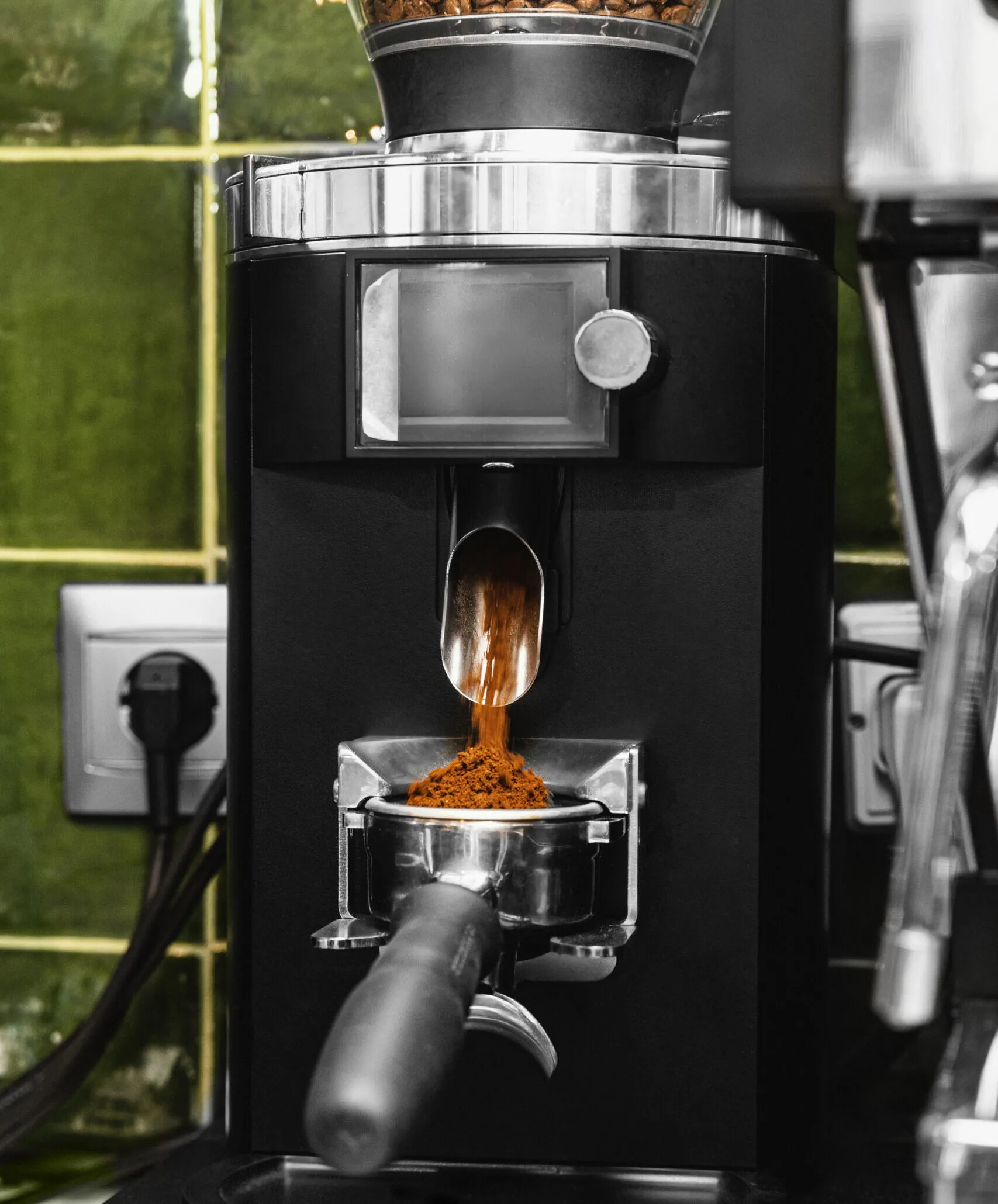
Grind only what you are about to brew. Whole coffee beans have a tiny surface area exposed to oxygen; ground coffee has an enormous one, which is why it stales in minutes rather than weeks. A burr grinder produces even particles, while a blade grinder chops unevenly and gives you sour and bitter notes in the same mouthful.
Storing coffee beans in Sri Lanka’s humidity
Heat, light, oxygen and moisture are the four enemies of fresh coffee, and a tropical kitchen offers all four in abundance. Here is what works:
- Do keep beans in an opaque, airtight container in a cool, dark cupboard.
- Do squeeze the air out of the original valve bag and fold it tightly shut if you have no container.
- Do freeze in small, sealed, single-dose portions if you must store beans for months, and brew straight from frozen.
- Do not keep beans in the refrigerator, where condensation and food odours ruin them.
- Do not store them in a clear jar on a sunny counter, however good it looks.
- Do not leave the hopper on your grinder full overnight, since that coffee stales fastest of all.
How much coffee should you use?
- Espresso. 18-20 g of coffee beans in, 36-40 g of liquid out, in 25-32 seconds.
- Pour-over. 60 g of coffee per litre of water, which is roughly 15 g for a 250 ml cup.
- French press. 70 g per litre, steeped for four minutes, then plunged gently.
- Cold brew. 100 g per litre, steeped 12-16 hours in the fridge, then diluted to taste.
Weigh your dose rather than scooping it. Two tablespoons of light-roast beans and two of dark-roast beans can differ by several grams, which is enough to move your cup from sweet to sour.

Buying coffee beans in Sri Lanka
Buy from roasters who print a roast date and tell you where the coffee came from. Locally roasted Ceylon lots give you the shortest possible journey from roaster to cup, while imported blends such as Lavazza offer consistency that is hard to beat for a busy bar. Many cafes keep both: a house blend for milk drinks and a rotating single origin for black coffee.
If you are just getting started, our guides on buying coffee beans in Sri Lanka and where to buy authentic Ceylon coffee beans in Colombo go deeper on brands and prices, and Toscana Ceylon is a good local starting point.
Frequently asked questions about coffee beans
How long do coffee beans stay fresh after opening?
Two to three weeks if the bag is resealed and kept cool and dark. Once opened, oxygen is the clock you are racing.
Are oily coffee beans a good sign?
A light sheen on a dark roast is normal. Heavy, sticky oil usually means the beans are either very dark roasted or old, and it also clogs grinders.
Can I use espresso beans in a French press?
Yes. “Espresso beans” describes an intended brew style, not a different product. Just grind coarser and expect a heavier, chocolatey cup.
Why does my coffee taste sour or bitter?
Sour usually means under-extraction, so grind finer or brew longer. Bitter usually means over-extraction, so grind coarser or brew shorter. Change one variable at a time.
Start with better beans
Fresh coffee beans, a burr grinder and an airtight container will do more for your cup than any other change you can make this month. Get those three right, then fine-tune your dose and grind until the coffee tastes sweet without sugar.
Ready to taste the difference? Explore our coffee range, see what pairs best with your coffee machine, or get in touch with the Colombo Coffee Company team for a recommendation.