

Imagine two kitchens on the same street, early on the same morning. That small scene explains the capsule vs bean to cup coffee machine choice better than any spec sheet.
In the first kitchen, someone slides a small capsule into a machine and presses a button. There is a soft hum, a thin stream of espresso, and the cup is ready. It takes under a minute, and the counter stays spotless.
In the second kitchen, a grinder whirs and the smell of fresh beans fills the room. The machine does the rest, and a creamy cup appears. It takes a little longer and a little more care.
Both people are happy today. Over a few years, however, their spending looks very different. This guide shows where the money goes, so you can choose the machine that fits your mornings and your budget.
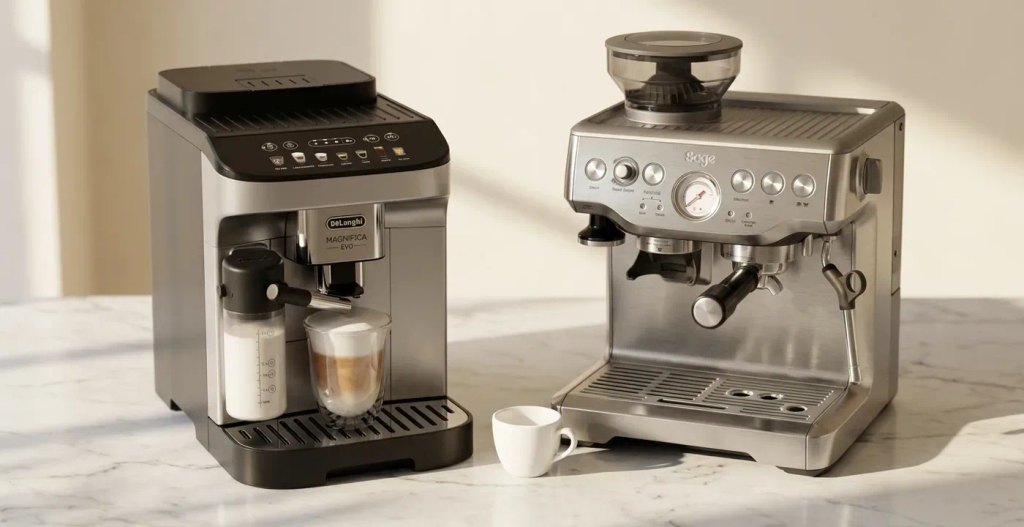
Capsule vs Bean to Cup: What Each Machine Actually Does
A capsule machine uses a sealed pod of ground coffee. You insert it, press a button, and hot water flows through. The coffee comes pre-measured, so every cup is almost the same.
A bean to cup machine is a type of automatic coffee maker. It holds whole beans, grinds them fresh, brews the coffee and often froths the milk. In other words, it does the barista’s work from start to finish.
There is a quiet difference in the cup too. A capsule usually holds about 5 to 7.5 grams of coffee, while a bean to cup espresso shot often uses 7 to 9 grams. This UK coffee supplier’s comparison makes the same point, and it notes that capsule costs add up over time.
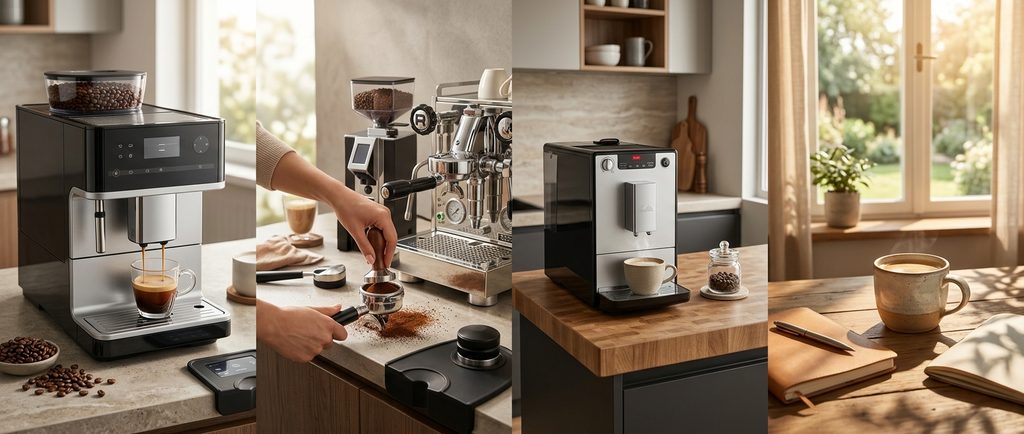
Coffee Cost Per Cup: Where the Lines Cross
Here is the money story in one line. Capsule machines usually cost less to buy, but each cup costs more. Bean to cup machines cost more up front, but each cup costs less. This coffee retailer’s guide reaches the same conclusion, and it adds that the saving matters most for heavy coffee drinkers.
Somewhere between the two, the lines cross. Let us find that point with an imaginary example. Imagine the bean to cup machine costs Rs 80,000 more than the capsule machine. Imagine too that each cup from beans costs Rs 75 less than a cup from a capsule. Divide 80,000 by 75, and you get about 1,070 cups. That is your break-even point.
Now see how your own habits change the answer.
- One cup a day: about three years.
- Two cups a day: about a year and a half.
- Four cups a day: under nine months.
These round numbers are only for illustration, and real prices change. So use current prices when you do your own sum.
Also count the whole cup, not just the coffee. Add the milk, the cleaning, the descaling, the servicing and the machine itself. People in the industry call this total cost of ownership. It is a grand name for a simple idea: judge a machine by what it costs over its whole life, not by its sticker price. Our coffee machine price guide shows what drives that cost.
Capsule vs Bean to Cup Convenience: How Much Effort Is One Cup?
Both machines are quick, but the effort behind the button is different.
- Speed. Capsule machines are usually the fastest. Bean to cup machines take a little longer, because they grind first.
- Cleaning. A capsule machine needs almost none, apart from emptying the used pods. A bean to cup machine has rinse cycles, grounds to empty and, often, a milk system to wash.
- Space. Capsule machines are usually compact. Bean to cup machines are bigger, so measure your counter first.
- Milk drinks. Many bean to cup machines froth milk automatically. With capsules, milk is often a separate step.
For most households, the gap is a few minutes a day. So the real question is whether those minutes matter to you.
Capsule vs Bean to Cup Taste and Choice: What Ends Up in the Cup
Capsules are sealed, so the coffee inside stays fresh until you use it. They are also consistent. However, each capsule fits only its own system, so your choice is limited to that range. In addition, every cup costs more, as we saw above.
A bean to cup machine opens the door to variety. You choose the beans, the strength and the size of the cup. In return, freshness becomes your job, so store your beans well. Our coffee beans freshness guide shows how.
Sri Lankan coffee is also making its way abroad, as our story of Sri Lankan green coffee reaching Dubai shows. Closer to home, you can try a local blend such as Toscana Ceylon.
Capsule vs Bean to Cup: Where Each Machine Fits in Homes, Offices and Hotels
The right machine changes with the setting. Colombo Coffee Company serves cafés, banquets, meeting rooms, offices and hotel rooms, and each one asks for something different.
- Hotel rooms and small meeting rooms. Single-serve simplicity often wins. Guests want one good cup with no fuss, and nobody is there to run a machine.
- Busy offices and banquets. Many cups are poured in a short time, so machines that brew from beans usually make better sense.
- Homes. It depends on how many people drink coffee, and how often. Our home coffee machine guide helps you compare.
Capsule Coffee Machine in Sri Lanka: What to Check Before You Buy
A few local details can make or break your choice.
- Capsule supply. Each capsule fits only one system, so check that your favourite capsules are easy to buy here before you choose a capsule coffee machine in Sri Lanka. Also ask about delivery.
- Climate. Our humid weather suits sealed capsules. Beans, by contrast, need an airtight container and a hopper that is not overfilled.
- Waste. Every capsule leaves packaging behind, so ask what recycling options exist near you.
- Water and power. Hard water scales up machines, so filter it and descale on schedule. Also, Sri Lanka runs on 230 volts, so check the rating.
- Service. Finally, ask who services the machine, and where.
For more depth on every machine type, read our coffee machine buying guide. Meanwhile, if you are leaning towards beans, our range of whole beans is a good place to start.
Which One Are You?
Still undecided? Match yourself to one of these.
- You drink one or two cups a day and hate mess. Choose a capsule machine, because it is quick, tidy and simple.
- You share the machine with family or colleagues. Choose a bean to cup machine. It saves money with every extra cup, and it suits different tastes.
- You love fresh beans and variety. Choose a bean to cup machine, since you control what goes in the hopper.
If you are still unsure, count your cups for one week. That number usually decides.
In the capsule vs bean to cup coffee machine debate, there is no wrong answer. There is only the answer that fits your day. Therefore, count your cups, think about your counter, and choose with confidence. If you also like the idea of making each cup by hand, our guide to automatic vs manual coffee machines compares one-touch and hands-on machines.
Ready to compare machines? Browse our coffee machines, or talk to the Colombo Coffee Company team, and we will help you find the right fit for your home or office.